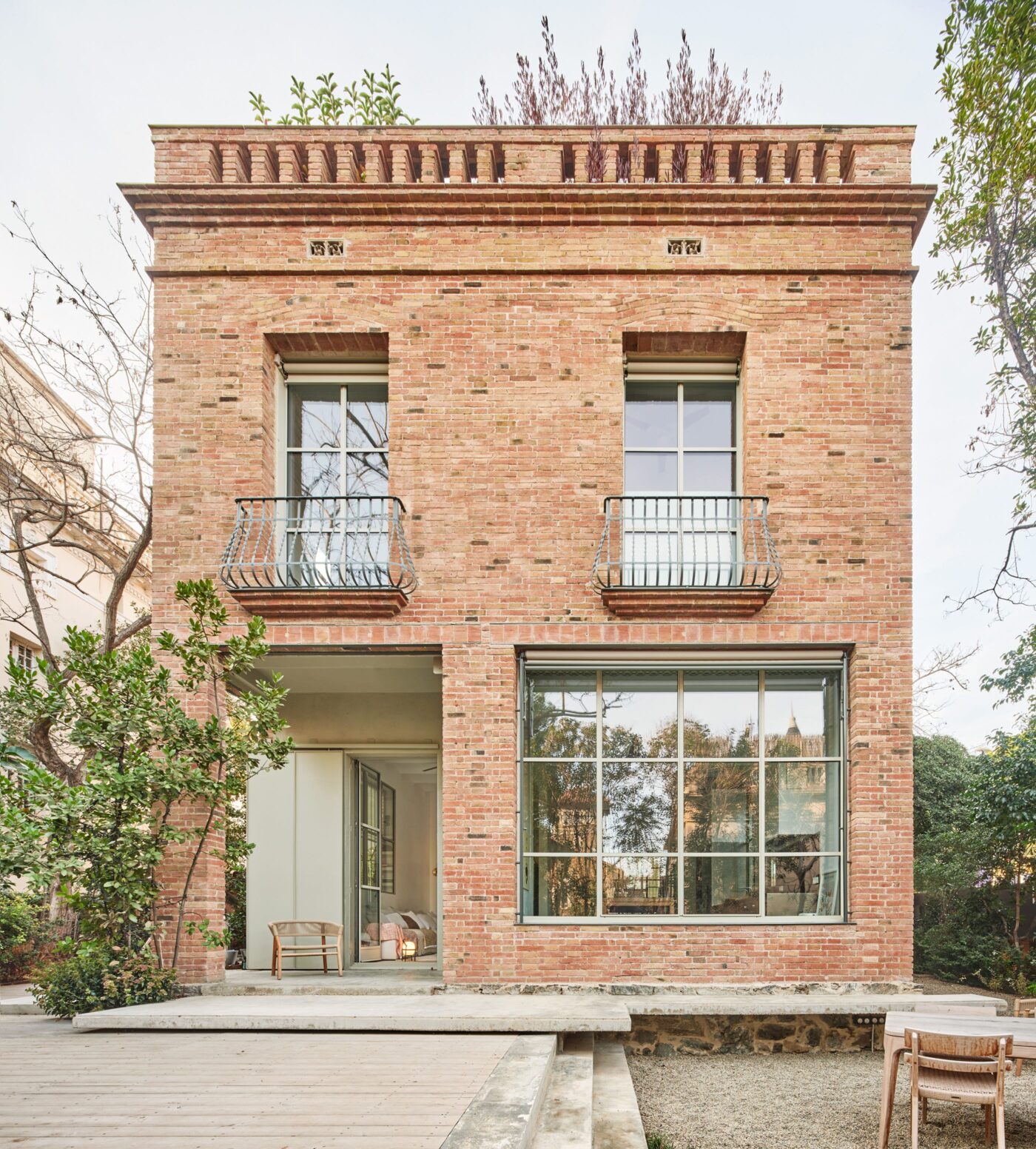
The renovation of this Barcelona house reworked both its interior and its garden, but with very different degrees of intervention. Inside, the home was remodelled to suit its new owners; outside, the touch was far lighter. The guiding challenge was to update the property while respecting its original layout and existing planting as much as possible.
That brief shaped how the teams worked. Verveine, a Barcelona-based landscape architecture studio founded by Lina Seguró Mendlewicz, led the garden; Calderon-Folch Studio handled the architecture; and Nuria Navarro was responsible for the interiors. All three collaborated from the start toward a single goal: an elegant, comfortable home suited to a new way of living, without erasing what made the house distinctive.
The building itself set the tone. It is a Noucentista-style villa, drawn from a Catalan cultural and aesthetic movement, and both the house and garden renovations strike a careful balance between that historical character and modern comfort. Rather than stripping the period detail out in favour of a blank contemporary box, the project keeps the villa’s identity intact and updates around it.
That restraint is what makes the result feel sustainable in more than name. Working with the existing structure and mature vegetation, instead of demolishing and starting over, preserves both the embodied history of the place and its established garden. It is a quieter kind of renovation, one that treats what is already there as an asset rather than an obstacle.
The payoff is a home that feels both rooted and current, a historic villa brought up to date for the people living in it now, without losing the character that made it worth saving. For anyone drawn to older properties, it is a persuasive model: renovate with the building, not against it.