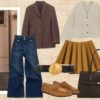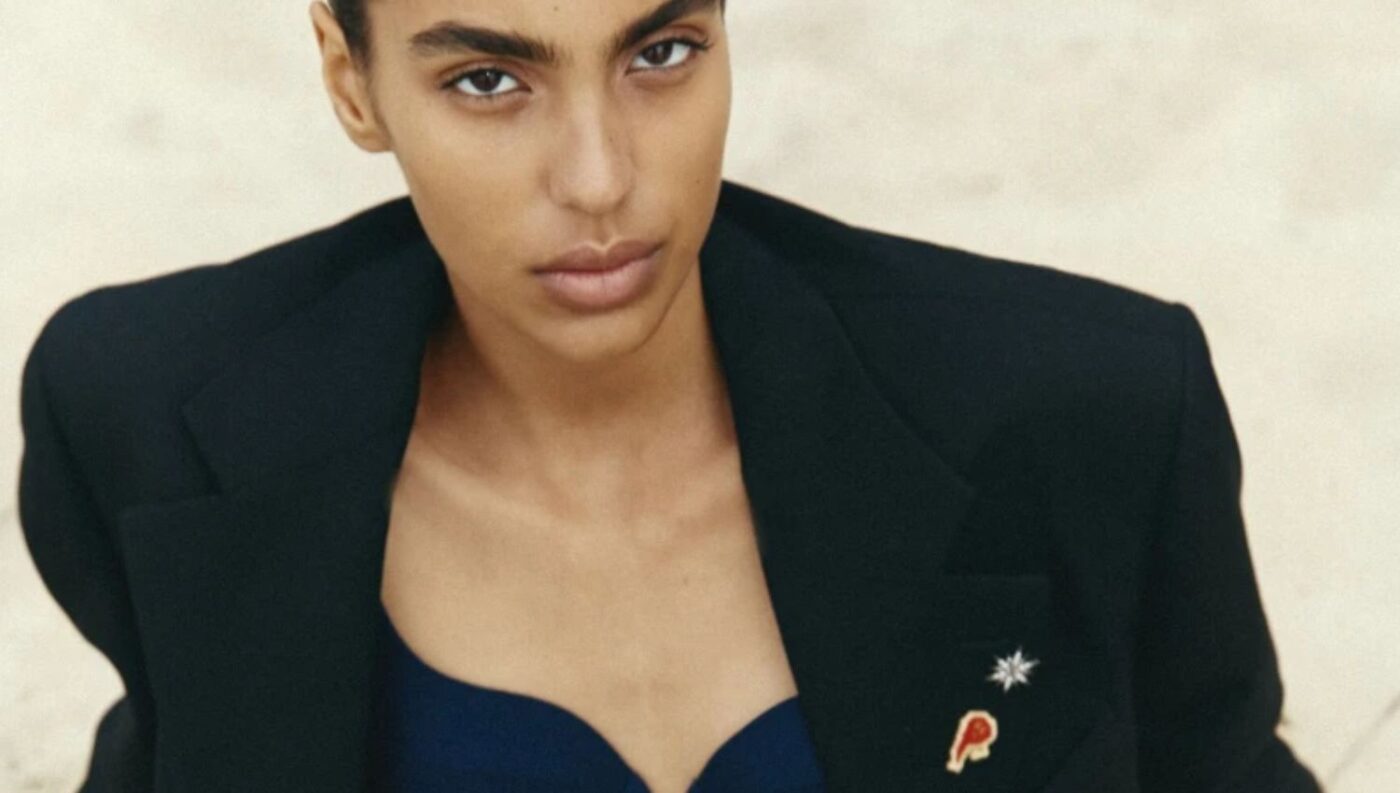
The season slows down and the wardrobe follows. Casual luxury for the last warm weeks, built on swimwear worn as clothing, weightless layering and jewellery doing the finishing.
Late summer runs at a different tempo. The urgency of high season has burned off, the days stretch without much obligation attached to them, and the sea stays within reach whether or not you get to it. Dressing becomes a question of ease rather than effort.
The clothes reflect that. This is a wardrobe for rest as much as for presence, worn simply but chosen deliberately, layered in a way that never reads as work. Nothing in it is heavy. Comfort and elegance stop competing, and the result looks sun-warmed rather than styled.
The swimsuit leaves the beach
The central move of the season is treating swimwear as clothing. A one-piece works as a top the moment you stop thinking of it as swimwear: high-cut leg, clean neckline, no visible hardware, in a colour that holds its own away from water. Tuck it into tailored shorts or wide linen trousers, add a belt to define the waist, and it functions exactly as a bodysuit does, only with better lines.
The bikini top plays a similar role under an open shirt or a light knit, with the straps doing the work of a necklace. What separates this from a beach cover-up is the rest of the outfit. Structured shorts, a proper shoe, a real bag. Once those are in place, nobody reads the top as swimwear.
Two practical notes. Fabric matters more than usual, since a swimsuit worn dry all day needs to keep its shape rather than sag, so look for a dense knit with decent recovery. And matte finishes travel further into evening than anything shiny.
Layering that adds nothing to the weight
Late summer layering is about air rather than warmth. The point is a second surface, not insulation.
An unbuttoned cotton shirt over a swimsuit, a fine-gauge knit thrown over the shoulders, a long open cardigan that moves when you do. The pieces should read as almost an afterthought, which is exactly why the proportions have to be right. If the base layer is close to the body, the layer over it goes loose and long. If the base is voluminous, the layer over it stays fine and short.
Colour makes this easier. Working within a narrow range of sand, cream, chalk, faded olive and washed black means every combination lands, and it removes the decision-making that formal dressing demands.
Jewellery as the finishing gesture
With this much simplicity in the clothes, jewellery carries most of the visual interest. It shows up as a discreet shine that frames a look rather than interrupting it.
Gold reads best against tanned skin and sun-bleached fabric. A single heavy chain, hoops with weight to them, a stack of thin bracelets that make a small sound when you move. On skin that has caught the sun, a plain gold cuff does more than anything ornate.
Skip anything that needs looking after. This is not the season for pieces that require thought.
Shoes and bags, doing less
Footwear stays low and structured: flat sandals with a substantial sole, a mule that stays on, a soft ballet flat for the walk from lunch to somewhere else. The shoe is what signals this is an outfit rather than beachwear, so it needs to look chosen.
The bag follows the same logic. Something slouchy in soft leather, roomy enough for the day, held in the hand rather than strapped across the body. Nothing pristine. A bag that has been used looks correct here in a way that a new one does not.