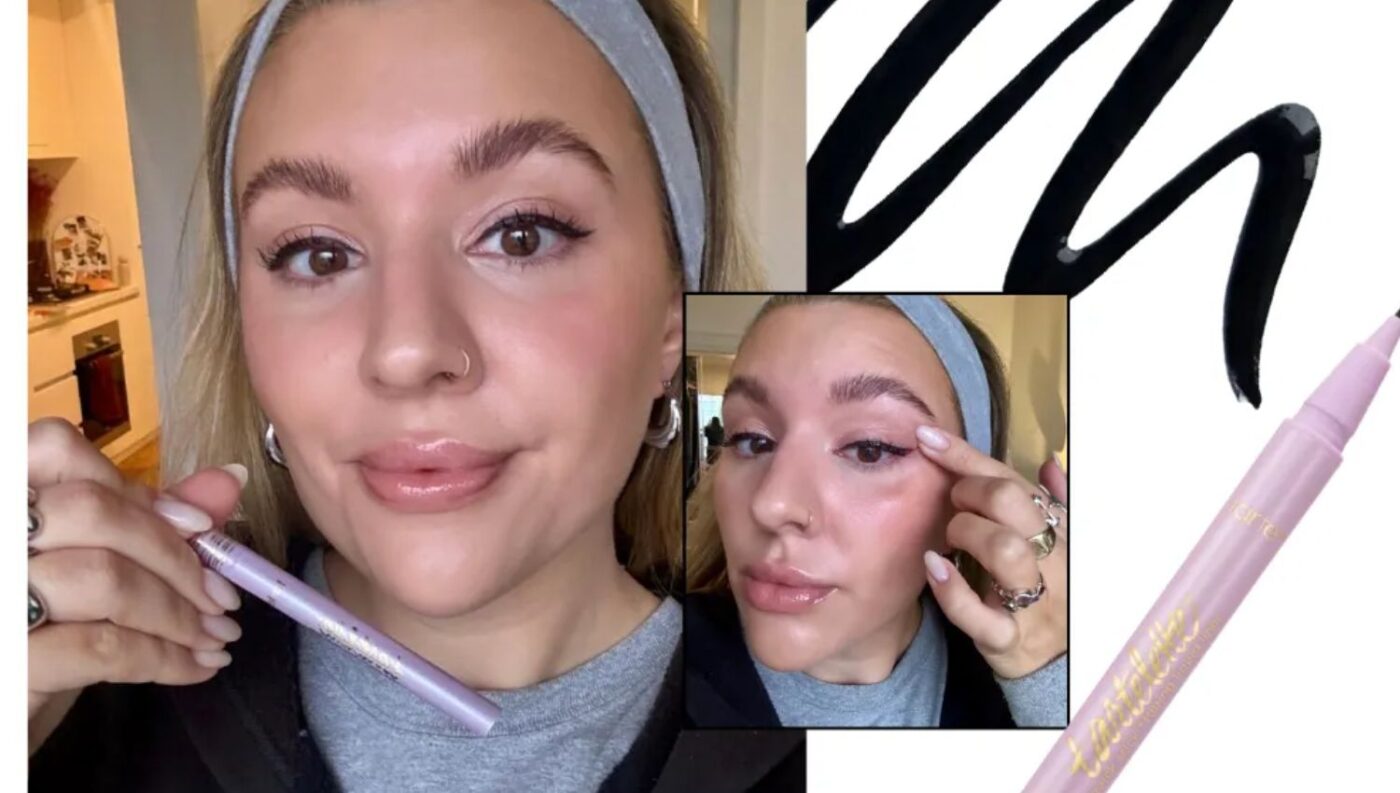
Tarte has borrowed the polymer trick that turned tubing mascara into a cult buy and applied it to the flick. Makeup artists think the logic holds up, with one caveat about finish.
Tubing mascara has spent the past few years moving from niche to non-negotiable. The pitch is easy to follow: length, a hold that lasts a full day without running or streaking, and removal that needs warm water and light pressure rather than a cotton pad and a scrub. Merit, Revitalash and Maybelline have all put out new versions this year alone, and demand shows no sign of cooling.
What was less predictable is where the technology would go next. Tarte has taken it to the eyeliner aisle with the Tartelette Tubing Peel-Off Liquid Eyeliner, £21 at Sephora, which promises a sharper line that stays where you put it and then lifts off cleanly at the end of the night.
How the technology translates from lash to lid
A tubing mascara works by wrapping water-resistant polymers around each individual lash, which raises an obvious question about how the same idea functions on skin.
Mezhgan Hussainy, celebrity makeup artist and co-founder of Product Society, says the difference comes down to what the product is gripping. Conventional liners lean on waxes and pigments to stick to the skin. A tubing formula instead lays down a flexible film across the surface, built to hold up against smudging, transfer, humidity and oil. That matters more around the eyes than almost anywhere else on the face, she notes, because movement, tears and the skin’s own oils break makeup down fast.
Celebrity makeup artist Joy Adenuga describes the wear pattern the same way she would with a tubing mascara: water-resistant while you have it on, then released by warm water and gentle pressure, with no rubbing and no harsh remover required.
Hussainy says longevity that doesn’t come at the cost of comfort is what she looks for in a product, and that tubing liners are positioned to deliver both.
The caveat nobody should skip
Adenuga flags one thing before anyone adds it to a basket. Tubing formulas tend to dry matte, so anyone who likes to layer liner or blur it into a soft, smudged line will get more out of a standard liquid or a pencil. This is a product for a clean, defined line, not a lived-in one.
Where she does see the appeal is in the situations that defeat ordinary liner. Oily lids, sensitive eyes, and long days with no realistic chance of a touch-up all suit a formula that sets and stays. She also singles out contact lens wearers and people who touch their faces constantly.
Hussainy is watching one more group. She wants to see how these formulas behave on mature eyelids where there’s texture or laxity, since both application and wear differ from smoother skin. If a tubing liner can glide on there and still refuse to smudge, she thinks it fills a genuine gap.
What happened in wear testing
Marie Claire UK put the claims through a full day. Writer Rebecca Fearn applied the liner as part of her usual morning routine and wore it from there without a single touch-up, judging it on ease of application, the precision of the applicator, pigment payoff, longevity, and whether it smudged, flaked or transferred. Removal was assessed separately: how easily it lifted, and whether it left anything behind.
Application was straightforward, including wings, which is where a stiff or scratchy applicator usually shows itself. Adenuga’s warning about finish landed exactly as described. The liner reads noticeably drier and less glossy than the wet-look liquid liners most people are used to, which will either be the selling point or the deal-breaker depending on the look you want.
The endurance test was a hot pilates class. Heat, sweat and an hour of movement produced no budging at all.
Removal, in the end, needed no product whatsoever. The flick came away from the lid in one piece, peeled off with a fingertip.