Two hairstylists on why the four o’clock headache is a warning, and how to keep wearing your hair up without paying for it in snapped strands.
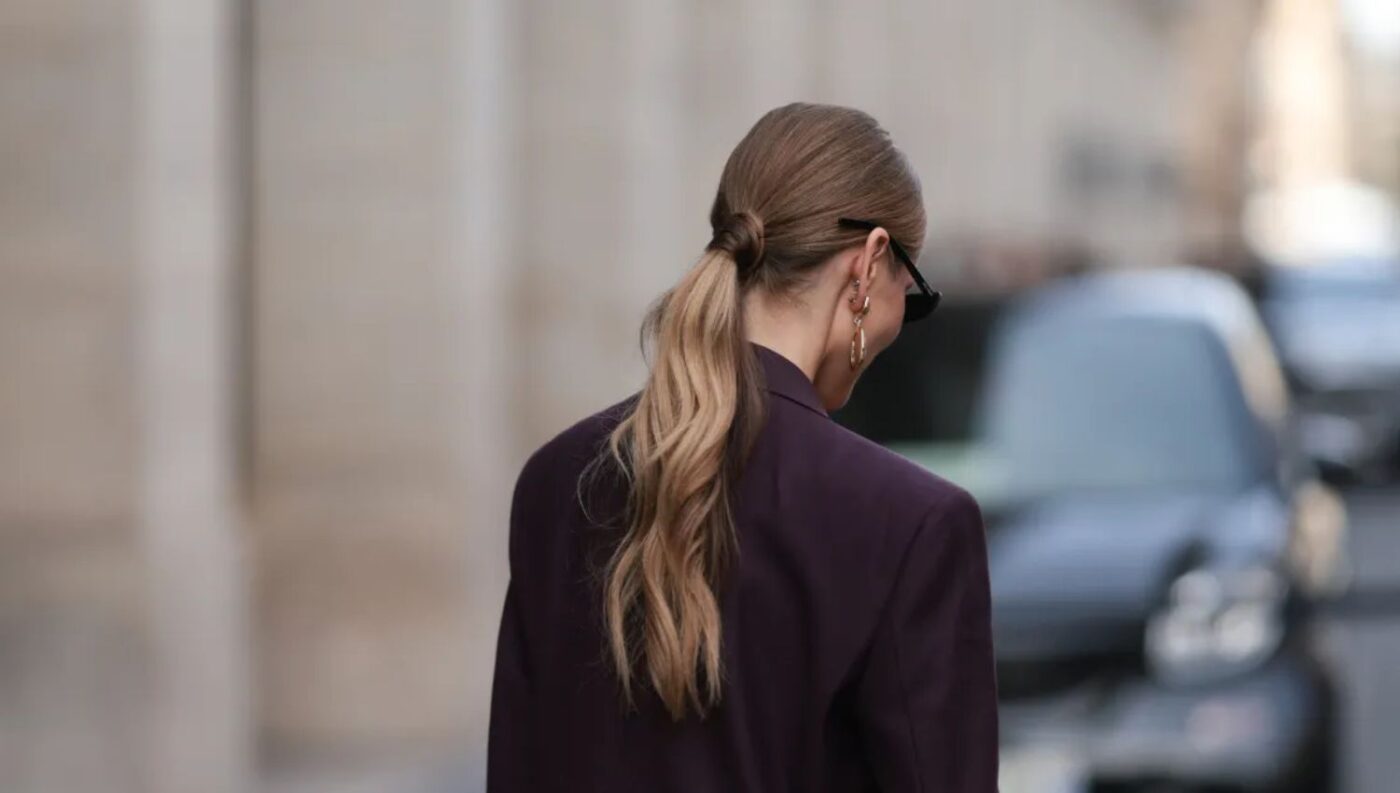
Heat does two things to hair: it makes you want it off your neck, and it makes the ponytail look like a styling decision rather than a surrender. Slicked-back buns and polished knots have carried this summer, doing the work of an outfit when the outfit isn’t doing much. Kim Kardashian and Ariana Grande have both leaned hard on the slicked-back look, and Kate Middleton went with a sporty ponytail at Wimbledon this year.
The problem shows up around mid-afternoon, as a dull, banded ache across the head. Pulling hair back day after day, especially with any real tension in it, puts strain on both the strands and the scalp underneath. At the far end of that sits something more serious than a headache.
Can a tight ponytail genuinely cause one?
Yes, though the occasional sleek bun isn’t going to do much beyond mild, short-lived discomfort. Tension at the root can set off what gets called a ponytail headache, a tight, dull sensation that comes from strain on the nerve endings in the scalp.
The words that matter are repeated and prolonged.
Cos Sakkas, global creative director at TONI&GUY, says pulling hair into a tight ponytail or top knot on a regular basis loads pressure onto the roots, and over time that builds into tension, most noticeably around the temples where the ache tends to register.
Jade Proctor, co-owner, senior director and colour specialist at Scullion & Scot, makes the same point from the other direction. Traction alopecia is a recognised form of hair loss, she says, and it comes from repeated tension on the follicles sustained over months or years. Wearing a sleek ponytail to a wedding is not what causes it.
Proctor’s summary of the actual risk: it isn’t the occasional sharp style, it’s wearing hair tightly in the same position every single day with no break for the scalp.
So the bun stays. How you wear it, and how often, is the whole question.
The signals worth reading
A snatched ponytail can look immaculate and still be too tight. Itching, tenderness or redness along the hairline all suggest the follicles are taking more strain than they should.
Check your temples while you’re at it. Short, snapped strands there are easy to mistake for baby hairs coming through.
If your ponytail leaves you with a headache by the end of the day, Proctor says, it’s too tight, full stop. Sakkas adds that no hairstyle should make the hairline hurt or visibly drag at the skin. That distinctive soreness when you finally let it down usually means the weight has been sitting in one spot for too long.
Don’t try to tough it out for the sake of a cleaner finish. Take it down, loosen it, or leave your hair out for a few days. Sleek should feel secure rather than punishing.
Move the pressure around
Wearing your ponytail at the same height every day means pulling on the same patch of scalp every day. Alternating helps more than you’d expect. Go high one day and low at the nape the next, trade the sculpted bun for something softer, and put loose or textured styles into the rotation.
For thick or heavy hair, Sakkas suggests splitting the ponytail into two sections, one sitting above the other, so the weight distributes rather than concentrating at the base. It also makes the tail look fuller.
And when a flyaway appears, resist the instinct to yank everything tighter. Sleek doesn’t have to mean tightest, Proctor says, pointing out that the best versions of these styles come from hair that’s healthy and conditioned and from using decent tools and products. A smoothing cream or leave-in adds polish before you secure anything. Hairspray and a shine mist handle the strays and deliver that glassy finish afterwards. Unless you specifically want a hard, fixed look, Sakkas would rather you put the heavy gel down and let a smoothing formula work instead.
Bobbles, brushes and bedtime
Small details drive most breakage. Old bobbles create friction and pull unevenly, so bin them once they’re stretched, rough or fraying. Ordinary rubber bands should be avoided outright. Snag-free elastics, satin scrunchies and hook elastics are all kinder.
Brushes count too. Proctor recommends a good-quality brush that glides rather than catches. Sakkas would use a comb on wet hair instead of a brush, since wet hair is at its most fragile and bristles can snag, stretch and snap it.
Then, however good the bun still looks at 11pm, take it out. Proctor’s rule is to let the hair and scalp relax overnight. Sleeping in a tight style adds pillow friction on top of an already strained hairline. If you need something in, Sakkas suggests a loose satin scrunchie and a silk or satin pillowcase.
The kit list
Color Wow Mist-Ical Shine Spray, £28 at Space NK. Glass-hair finish with no extra tightening required.
Aveda Air Control Light Hold Hair Spray, £27 at Sephora. Light to medium hold for keeping flyaways down.
Denman D81M The Style & Shine Smoother, £17 at LookFantastic. Smooths dry hair with less snagging.
Hair Gain Comb, £11.95 at LookFantastic. The gentler option for detangling wet hair.
SILKE London Silk Hair Ties, £35 at Silke London. For securing hair loosely with minimal friction.
Rehab. Silk Top Pillow Case, £30 at Rehab Your Hair. Cuts down overnight rubbing and breakage.