Her hairstylist calls them Love Layers. Two celebrity hairdressers explain how the nineties cut got sleeker, longer and far less work.
Very few haircuts get to go by a first name. The Rachel earned it in the early seasons of Friends, when Rachel Green’s shoulder-skimming pile of layers became about as recognisable as the character wearing it, and sent a generation into salons asking for it by name.
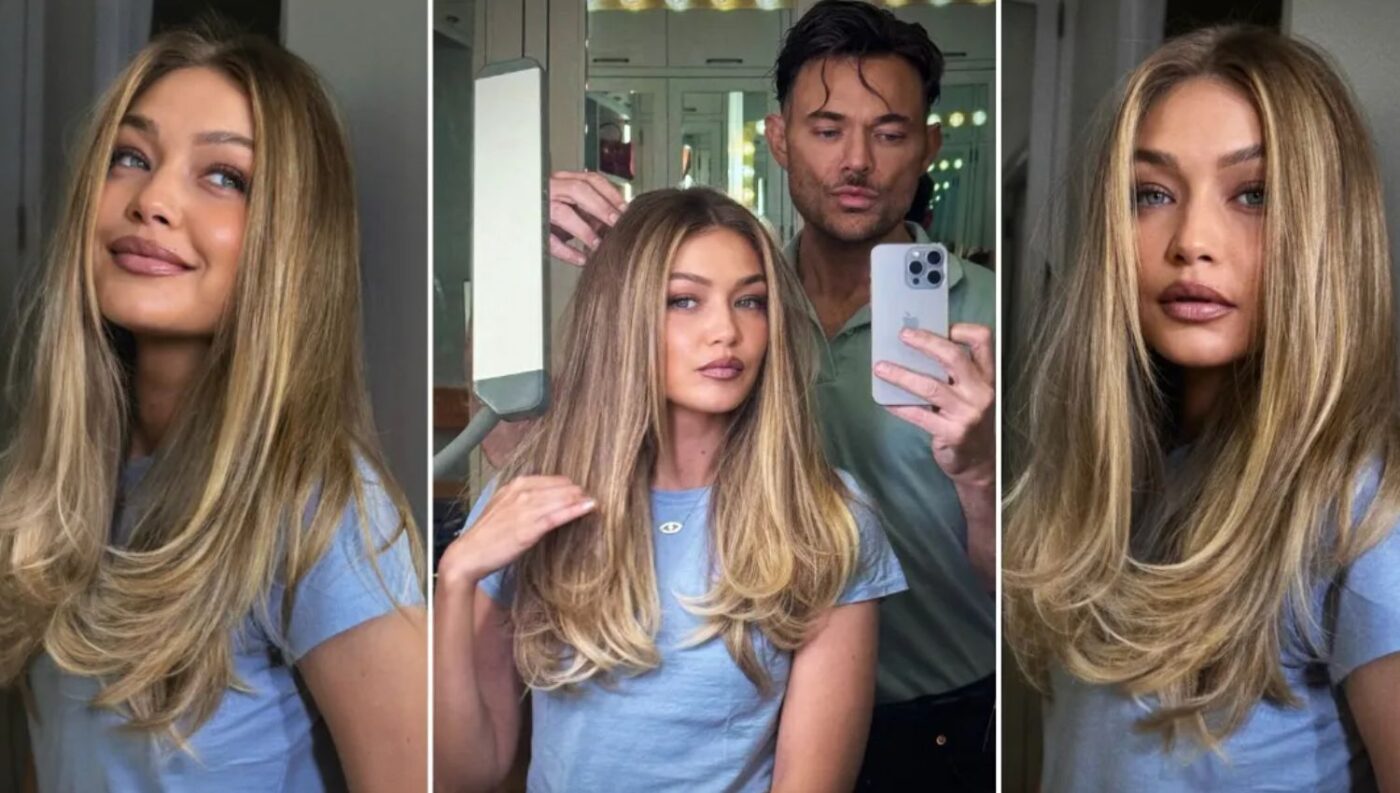
Three decades on, it keeps resurfacing in new forms. The latest belongs to Gigi Hadid, whose take is glossier and swishier than the original ever was. Longer layers, sweeping sections around the face, ends that curve rather than flick, and enough bounce to read as a Rachel without tipping into nineties cosplay.
Her hairstylist Dimitris Giannetos explained the thinking on Instagram, describing it as an updated C-cut with what he calls Love Layers, or heart-shaped layers.
To work out how the rest of us should approach it, I asked hairdressers Samantha Cusick and Jay Birmingham.
What makes it the modern version
The original was built on short, visible layers and a rounded, bouncy blow-dry. The 2026 version is quieter about all of it.
Birmingham describes the shift as softer glamour. Where the nineties cut leaned on choppy layers and serious volume, the current one is sleeker, longer and considerably easier to live with. The layers blend instead of stepping, the movement is gentler, and the finish reads glossy rather than fluffy.
That gap is exactly why the revival works. Nobody is trying to reproduce Jennifer Aniston’s haircut section by section. What people want is the effect, the bounce and the shine, according to Birmingham.
Cusick reads the comeback as two things happening at once. There’s the wider return to nineties beauty, and there’s a growing preference for cuts built around movement. Volume, swing and that lived-in layered look are what everyone is after right now, she says, the kind that appears effortless while being carefully planned. The original Rachel had all of it. It was simply styled in a far more structured, high-maintenance way because that was the era.
What to say in the chair
The name alone will summon a very particular mental image, so bring a photo of the longer, current version rather than trusting the reference to land.
The point to press hardest is that you want movement without losing weight through the ends. Birmingham’s phrasing is long, seamless layers that create movement without stripping out too much weight. Soft face-framing pieces sitting around the cheekbones or the jawline will open the face up while keeping the whole thing elegant.
The layering itself should disappear into the cut. As Birmingham puts it, the hair needs to move naturally, which means the layers have to feel invisible rather than obvious. Visible steps are what dates it.